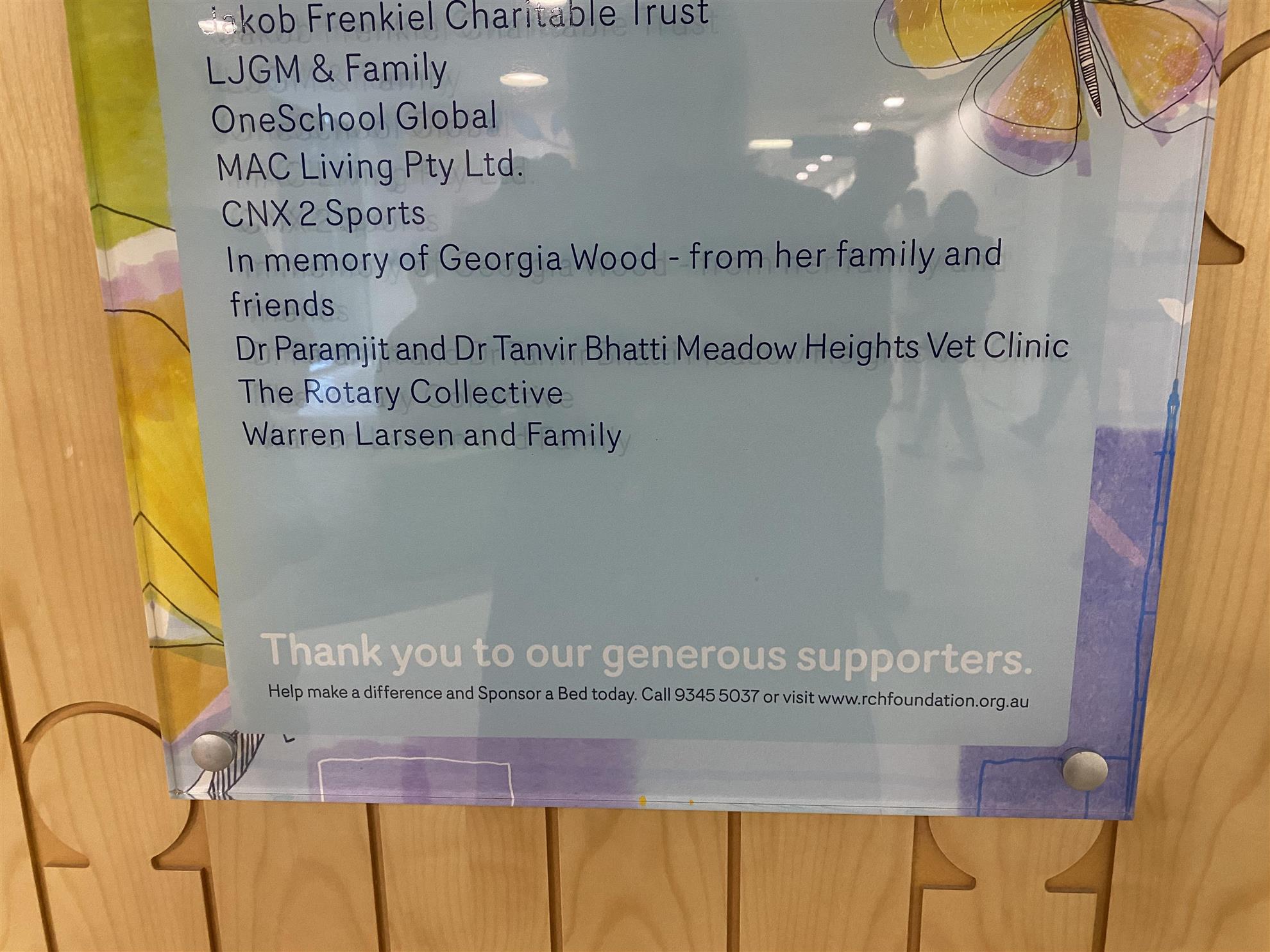
Every baby deserves the strongest possible start in life. The Rotary Club of Port Phillip is proud to be part of the Rotary Butterfly Bed Collective, a group of Rotary Clubs coming together to sponsor a NICU bed at the Royal Children's Hospital Melbourne.
When Rotary Clubs work together, small contributions create a big impact by helping provide critical care for our youngest and most vulnerable patients and giving families hope during their most challenging moments.
🦋 Helping fragile butterflies take flight.
💙 Supporting life from its very first moment.
🤝 Rotarians changing lives from the very first breath.
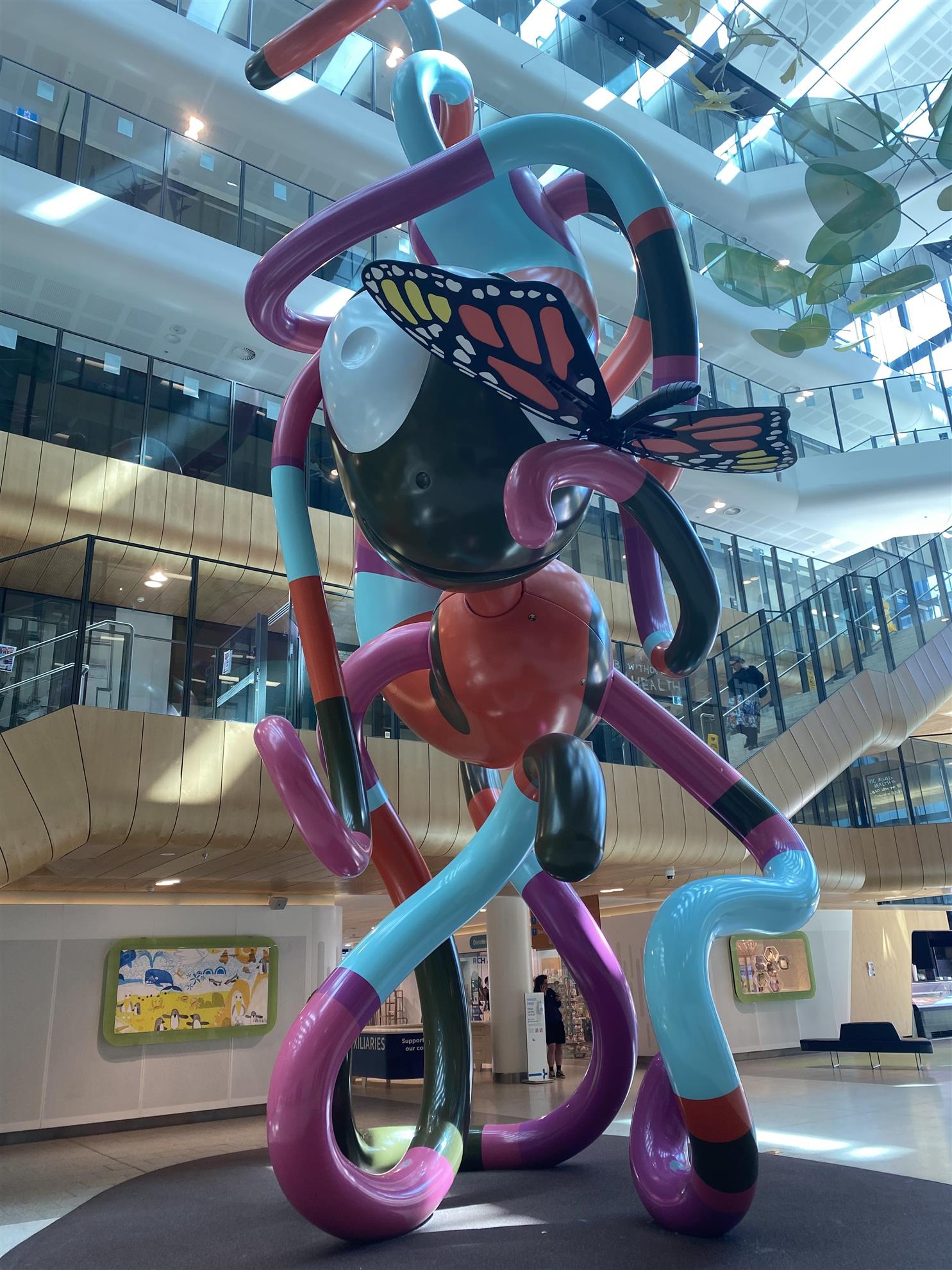
Walking through the front doors of The Royal Children’s Hospital (RCH) Melbourne, you brace yourself for the heavy, clinical atmosphere that usually defines a major medical centre. Instead, you are met with an environment that feels less like a sterile institution and more like an interactive, light-filled sanctuary designed specifically to ease a child's fear.
As a visitor, the first thing that anchors your attention is the magnificent, double-story cylindrical aquarium rising up through the main atrium. Filled with vibrant coral and schooling fish, it serves as a hypnotic distraction for wide-eyed siblings and anxious parents alike. Just a short walk away, you witness families gathered around specialized glass viewing panels, completely enchanted by the resident meerkats darting around their integrated habitat. Large windows frame the sprawling green lawns of nearby Royal Park, flooding the communal spaces with natural light and keeping the outside world within comforting reach.
Navigating the hospital reveals a structure built entirely around the family unit. Wandering past the wards—thoughtfully named after native Australian wildlife like the Cockatoo Ward—you notice the practical touches that make a stressful stay manageable. There are welcoming parent lounges equipped with basic kitchen amenities, a dedicated laundry facility, and even a free Hoyts Beanbag Cinema where young patients and their immediate families can escape into a movie for a couple of hours.
The atmosphere is carefully curated to strip away the intimidation of medicine. You pass clinical staff moving with quiet purpose, but you also cross paths with Clown Doctors dedicated to sparking unexpected laughter down the hallways. Security is present but reassuring; parents and primary guardians wear designated lanyards for 24/7 access, ensuring the wards remain a safe, controlled space for recovery.
Leaving the building, the lingering impression isn't one of illness, but of profound care. The RCH manages to balance its status as a world-class trauma and transplant centre with a deeply empathetic truth: that healing a child requires an environment filled with light, distraction, and play.